Awareness of neurodevelopmental disorders and neurodiversity has increased significantly over the past decade. This has led not only to higher numbers of diagnoses, but also to a growing recognition of the need to educate professionals and practitioners across multiple fields, including sports, physical education, social work, and healthcare.
Depending on the definition, neurodevelopmental disorders typically include conditions such as ASD (autism spectrum disorder), ADHD (Attention-Deficit/Hyperactivity Disorder), specific learning disorders (e.g., dyslexia and dyscalculia), and motor-related conditions such as Tourette syndrome and developmental coordination disorder. These conditions share common characteristics: they emerge in early childhood, are related to brain development, and affect learning, behavior, social interaction, and motor skills. In both academic and everyday contexts, these differences are increasingly discussed under the broader concept of neurodiversity.
Within the COOL-APA project, it became clear early on that a dedicated study unit on this topic was needed in the curriculum. This created the need to explore existing literature—both peer-reviewed and grey literature—to better understand what is already known about the relationship between physical activity and neurodevelopmental disorders.
The literature search was approached from a practical perspective, aiming for a comprehensive understanding of the field rather than a fully systematic review. Four categories of sources were included:
- Category 1: Peer-reviewed articles
- Category 2: Other published papers in professional journals
- Category 3: Reports, policy documents, national guidelines, and recommendations
- Category 4: Theses
AI-supported search tools, such as GoogleScholarLabs and KeeniousPlus, were used with prompts including:
- “What does research indicate about the needs of neurodivergent individuals for adapted physical activity across the lifespan?”
- “What age-specific needs (children, adolescents, adults) have been identified in the context of adapted physical activity and neurodiversity?”
- “What are the specific needs related to adapted physical activity among neurodivergent people?”
The search also included the term neurodevelopmental disorder (NDD) alongside neurodiversity-related terminology.
In total, the search resulted in 72 publications (see Figure 1). The dataset is weighted toward peer-reviewed research, which strengthens the scientific reliability of the review. A substantial number of systematic reviews allows for synthesis and supports more generalizable conclusions, forming the core theoretical and evidence base, while individual studies add depth and contextual understanding.
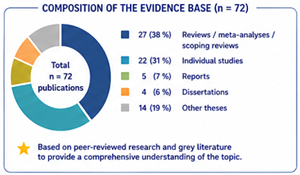
Figure 1. The composition of studies found (ChatGBT)
The main effects of physical activity on the well-being of neurodivergent people
Overall, the literature clearly indicates that physical activity is one of the most effective ways to support the well-being of neurodivergent individuals. The key effects relate to motor skills and physical performance, cognitive functions (especially executive functions), mental health and emotional regulation, social skills and participation, sensory characteristics, and barriers to participation (see Figure 2).

Figure 2. The main effects of physical activity on well-being of neurodivergent people (ChatGBT)
Adapted physical activity has a wide range of positive effects, supporting physical, cognitive, emotional, and social development. Research shows consistent improvements in motor skills such as balance, coordination, and overall physical fitness, which can enhance independence in daily life. At the same time, physical activity contributes to cognitive functioning, particularly executive functions such as attention, working memory, and self-regulation, especially when activities combine movement with cognitive or social elements.
In addition, regular physical activity can reduce anxiety and stress while improving mood and emotional regulation, making it a valuable and accessible support for mental well-being. It also creates meaningful opportunities for social interaction, helping to strengthen communication skills, peer relationships, and a sense of belonging when activities are delivered in supportive and structured environments.
However, participation is often influenced by sensory sensitivities and environmental factors. Overstimulation, unclear instructions, or unpredictable settings can create barriers, while structured, visually supported, and sensory-friendly environments can significantly enhance engagement. Overall, the evidence highlights that physical activity is highly beneficial, but its effectiveness depends on inclusive, individualized, and well-designed approaches that take into account the diverse needs of participants.
Recommendations for adapted physical activity practice
Effective adapted physical activity (APA) requires more than simply increasing participation; it depends on thoughtful and inclusive design. Programs should combine physical, cognitive, and social elements and be delivered in a structured and predictable way to support learning and engagement. Individualization is essential, taking into account each participant’s motor skills, sensory needs, preferences, and motivation.
The environment plays a critical role in enabling participation. Sensory-friendly settings, clear visual instructions, and flexible structures can significantly reduce barriers and improve the overall experience. Social aspects should also be intentionally supported through small groups, guided interaction, and a safe, encouraging atmosphere.
Finally, the competence of professionals is a key factor. Teachers, coaches, and instructors need training in neurodiversity and adapted physical activity to effectively design and deliver inclusive programs. Overall, successful APA practice is built on a combination of structured programming, individualized support, inclusive environments, and skilled facilitation.
End note: Research gaps
Despite the growing body of research, several important gaps remain. The long-term effects of physical activity interventions are still not well understood, as many studies focus on short-term outcomes. There is also a lack of standardized intervention designs and outcome measures, making it difficult to compare results across studies and identify the most effective approaches.
In addition, more research is needed on adolescents and adults, as much of the existing evidence focuses on children. The underlying mechanisms explaining how and why physical activity produces its benefits are not yet fully understood. Finally, emerging areas such as digital tools and technology-supported interventions show promise but require further investigation to better understand their effectiveness and practical application.
Jenni Harala, Senior lecturer
Physical activity and well-being
Haaga-Helia University of Applied Sciences