9.-12.6.2026 Prague
Cool-Apa team met onsite in EUCAPA Congress (18th European Congress of Adapted Physical Activity) in the beginning of June in Prague.
Cool-Apa partner meeting
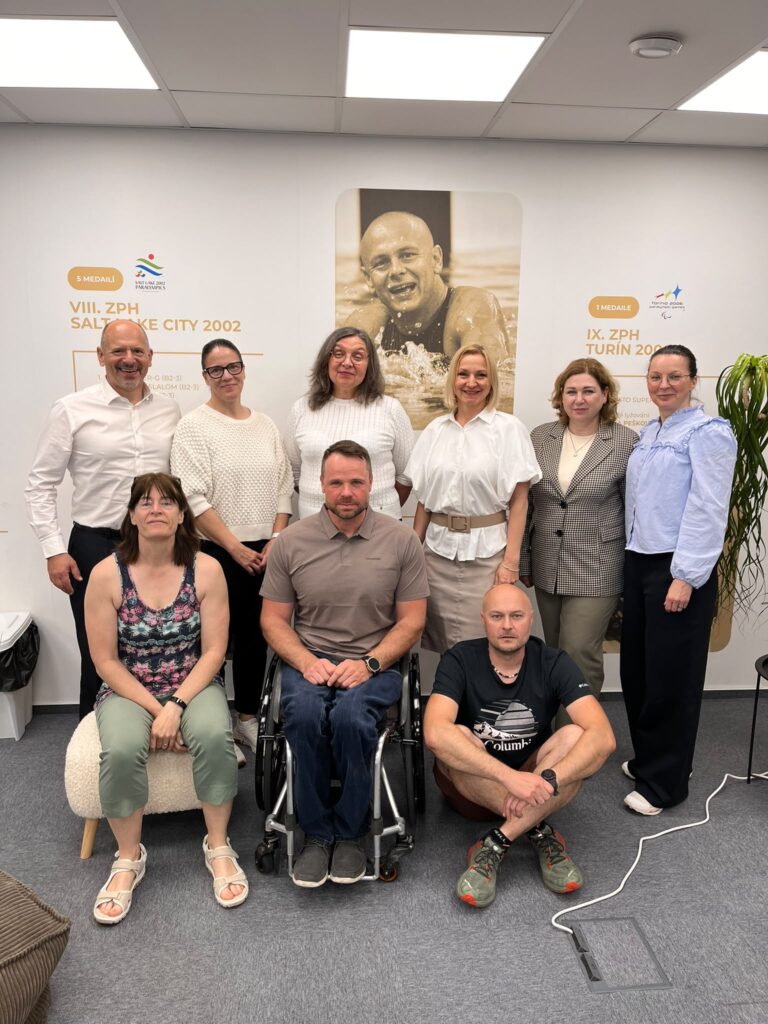
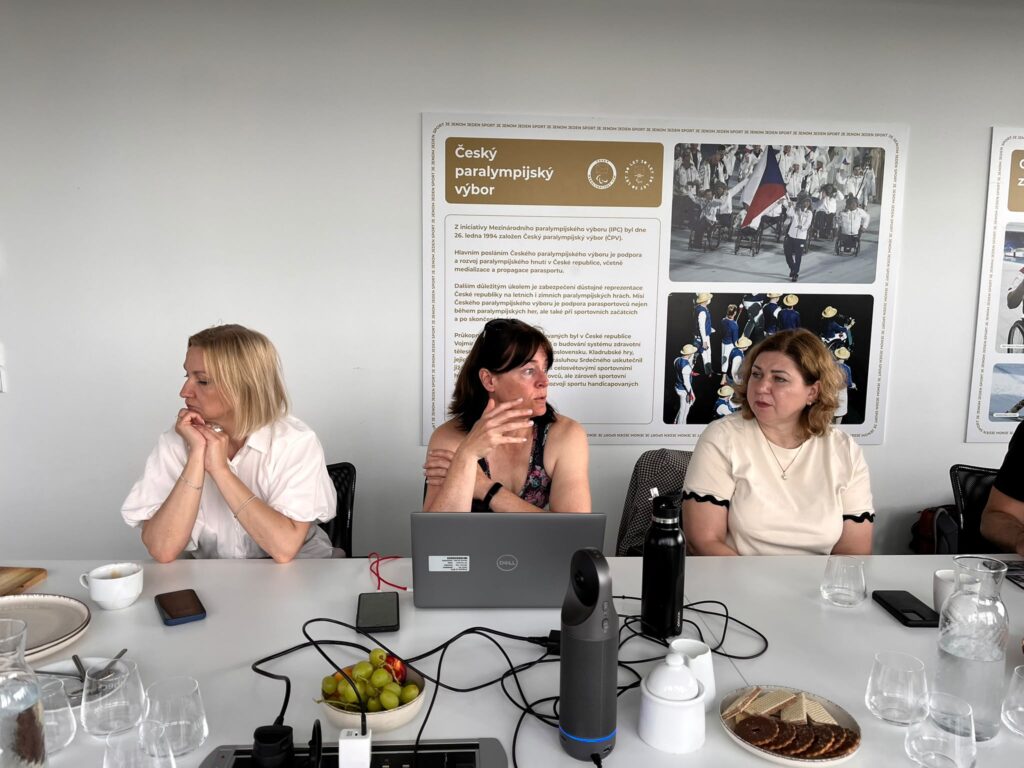
Before the conference, the project team met at the Czech Paralympic Committee to align on assessment practices for the first two pilot modules to be implemented in autumn 2026. The discussion focused on developing a learner-centered approach supported by digital tools such as Padlet and Miro, which enable students to document their learning journeys while remaining visible to teachers. The group also addressed the use of artificial intelligence, agreeing that its use is permitted if transparently reported and guided by clear GDPR-compliant principles, with further instructions to be shared among partners. Preliminary assessment criteria were outlined, emphasizing goal setting, application of knowledge in practice, reflection, and evidence of competence, with three levels defined for evaluating progress. In addition, partners highlighted the importance of regular live check-ins with students, the nomination of local tutors, and the creation of an introductory online community space to foster connection among participants. Examples of Moodle implementations, including H5P activities and interactive welcome materials, were shared, and it was agreed to pilot these approaches in the upcoming modules.
Oral presentation: Future training needs in adapted physical activity in Europe – Insights from a multi-cultural survey
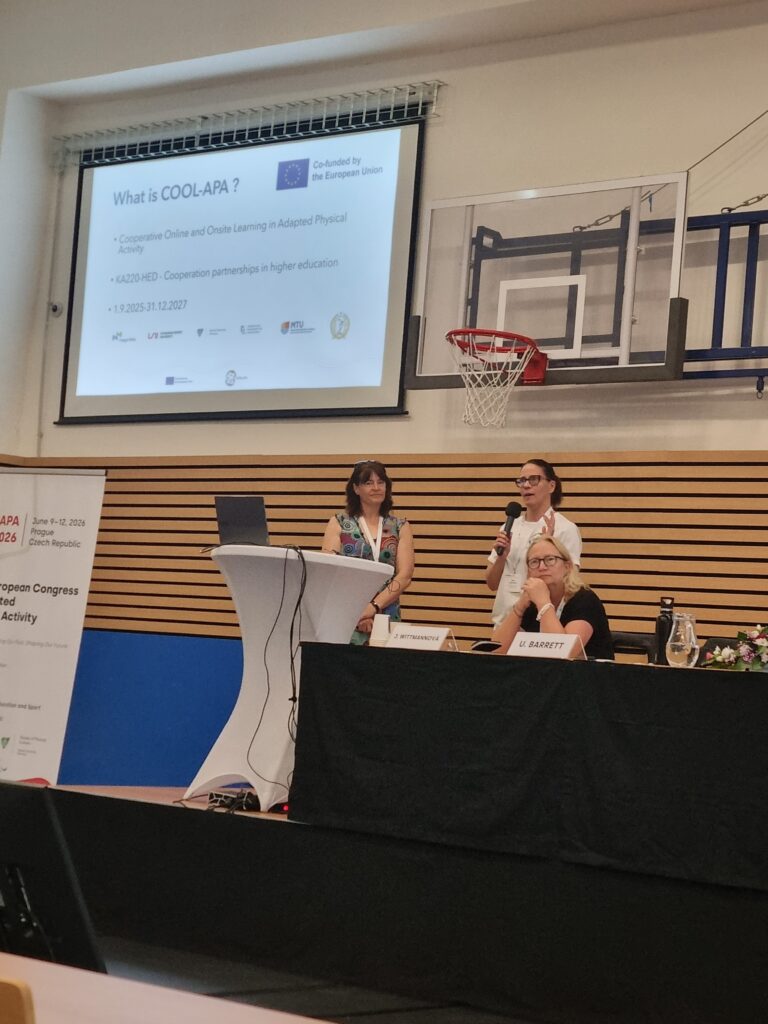
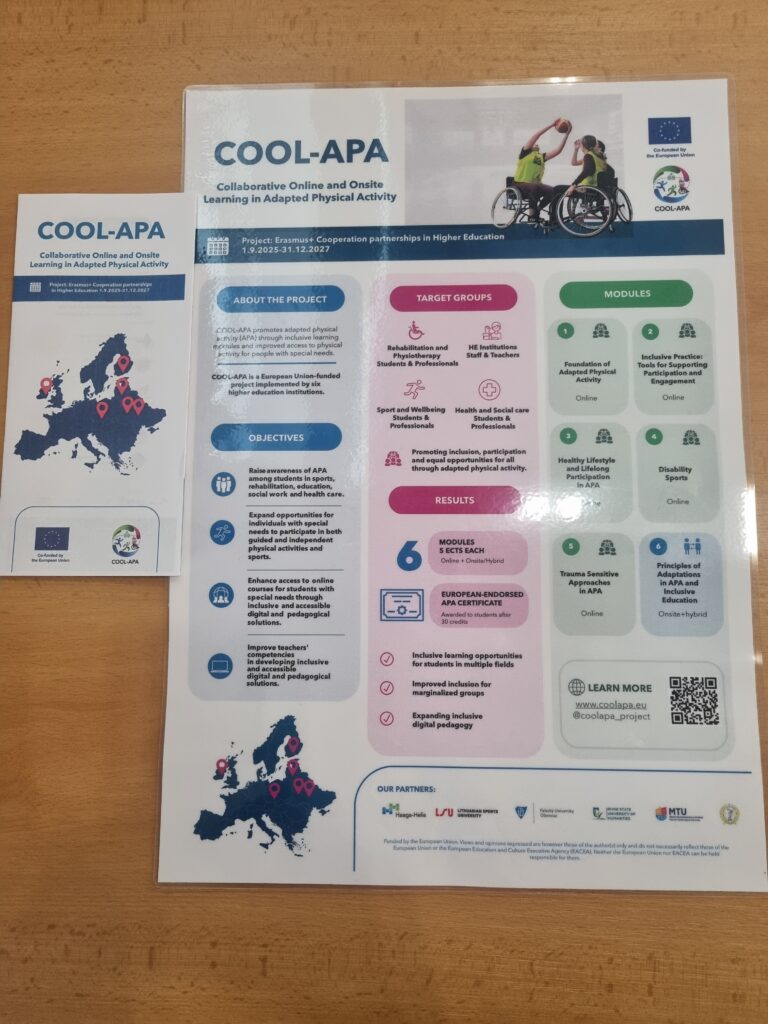
On Thursday morning, Ursula Barrett from MTU and Milla Reponen from HHUAS delivered an oral presentation on the results of a European-wide survey exploring future training needs in APA. The presentation began with an overview of the COOL-APA project, followed by a detailed discussion of findings from 587 students and professionals. Key areas examined included respondents’ familiarity with APA and the European Standards of APA, their top-ranked topic preferences for inclusion in the COOL-APA training, and their preferred approaches to both online and onsite learning.
The presenters highlighted several important statistical trends and explained how these insights informed project partner decisions. These included updates to the titles and content of the six training modules, as well as the design of delivery modes to support both online and onsite learning within a framework of a pedagogy of care.
The session concluded with guidance on where to find further information about the project and how to register an expression of interest in participating in the pilot modules.
During the Q&A session, a key question from the audience focused on the use of AI in module delivery and assessment. The presenters outlined the partners’ approach to this topic and discussed how AI considerations have been incorporated into the project.
Workshop: Cool-Apa
At the end of Thursday, approximately 20 participants gathered for an interactive COOL-APA workshop that focused on inclusion in adapted physical activity. The session was led by Meeri Kuisma, a third-year student at Haaga-Helia, and formed part of her thesis work.
The session provided a practical opportunity to reflect on inclusive practices, share experiences from different countries, and explore strategies for creating accessible and engaging learning and sport environments. Through collaborative activities and discussions, participants examined real-life scenarios, considered the role of professionals in promoting inclusion, and exchanged ideas on how to apply these principles within the COOL-APA modules.
The results of the workshop will be used in the development of the COOL-APA modules and in planning their future implementation. A more detailed summary of the workshop will be shared in a separate blog post in August.